侯恩党13693683012
 侯恩党13693683012
在化工、涂装、制药、锂电池等行业的车间里,大量有机溶剂在生产过程中以废气或废液的形式“流失”。它们既是环境的负担,也是企业账本上不断攀升的采购成本。溶剂回收装置正是针对这一痛点的精准解药——通过蒸馏、冷凝、吸附、膜分离等物理或化学手段,将废溶剂中的有效成分提取、精制并回用于生产线,实现从“花钱处置危废”到“从废液里掘金”的转变。
In workshops of chemical, coating, pharmaceutical, lithium battery and other industries, a large amount of organic solvents are "lost" in the form of waste gas or liquid during the production process. They are both a burden on the environment and a constantly rising procurement cost on the corporate ledger. The solvent recovery device is the precise antidote to this pain point - by using physical or chemical means such as distillation, condensation, adsorption, membrane separation, etc., the effective components in the waste solvent are extracted, refined, and reused in the production line, achieving a transformation from "spending money to dispose of hazardous waste" to "mining gold from waste liquid".
一、使用范围:横跨多行业的通用方案
1、 Scope of use: Universal solutions spanning multiple industries
溶剂回收装置的应用版图极为广阔,几乎涵盖所有使用有机溶剂的工业领域:
The application scope of solvent recovery devices is extremely broad, covering almost all industrial fields that use organic solvents:
锂电池行业(NMP回收):N-甲基吡咯烷酮是锂电正极涂布工序的关键溶剂,2025年中国锂电行业NMP需求量预计突破200万吨。涂布机排出的高温NMP废气经冷凝液化后,再通过精馏提纯可达到99.9%的电子级纯度,直接返回生产线循环使用,回收率高达99%以上。
Lithium battery industry (NMP recycling): N-methylpyrrolidone is a key solvent in the coating process of lithium battery cathodes. The demand for NMP in China's lithium battery industry is expected to exceed 2 million tons by 2025. The high-temperature NMP waste gas discharged from the coating machine can be condensed and liquefied, and then purified by distillation to achieve 99.9% electronic grade purity. It can be directly returned to the production line for recycling, with a recovery rate of over 99%.
汽车涂装与喷漆行业:喷漆、清洗工序产生大量油性/水性废溶剂。采用真空低温热泵蒸发工艺,在绝对真空条件下降低溶剂沸点,使回收率稳定在70%以上,同时大幅降低能耗和操作风险。
The automotive painting and spray painting industry generates a large amount of oily/water-based waste solvents during the painting and cleaning processes. Adopting the vacuum low-temperature heat pump evaporation process, the boiling point of the solvent is reduced under absolute vacuum conditions, stabilizing the recovery rate at over 70% while significantly reducing energy consumption and operational risks.
超纤材料与化纤行业:生产过程中二甲基甲酰胺(DMF)等溶剂用量巨大。采用多效蒸馏-膜分离耦合工艺,通过三效蒸发器串联和PVDF复合膜分离装置,溶剂回收率可提升至98.5%,回收纯度达99.9%。
Microfiber materials and chemical fiber industry: The production process requires a huge amount of solvents such as dimethylformamide (DMF). By adopting a multi effect distillation membrane separation coupling process and connecting a three effect evaporator in series with a PVDF composite membrane separation device, the solvent recovery rate can be increased to 98.5% and the recovery purity can reach 99.9%.
包装印刷、医药化工、橡胶塑料等行业:利用活性炭吸附+热氮气脱附+冷凝精制组合工艺,可回收甲苯、乙酸乙酯、异丙醇等多种单一或混合溶剂,回收率超过90%,净化率达96%。
Packaging and printing, pharmaceutical and chemical industries, rubber and plastic industries, etc.: By using a combination process of activated carbon adsorption, hot nitrogen desorption, and condensation refining, various single or mixed solvents such as toluene, ethyl acetate, isopropanol, etc. can be recovered with a recovery rate of over 90% and a purification rate of 96%.
二、不同技术路线的工艺优势
2、 Process advantages of different technological routes
针对废溶剂的成分、浓度和含水率差异,溶剂回收装置发展出多条成熟的技术路线:
In response to the differences in composition, concentration, and moisture content of waste solvents, solvent recovery devices have developed multiple mature technical routes:
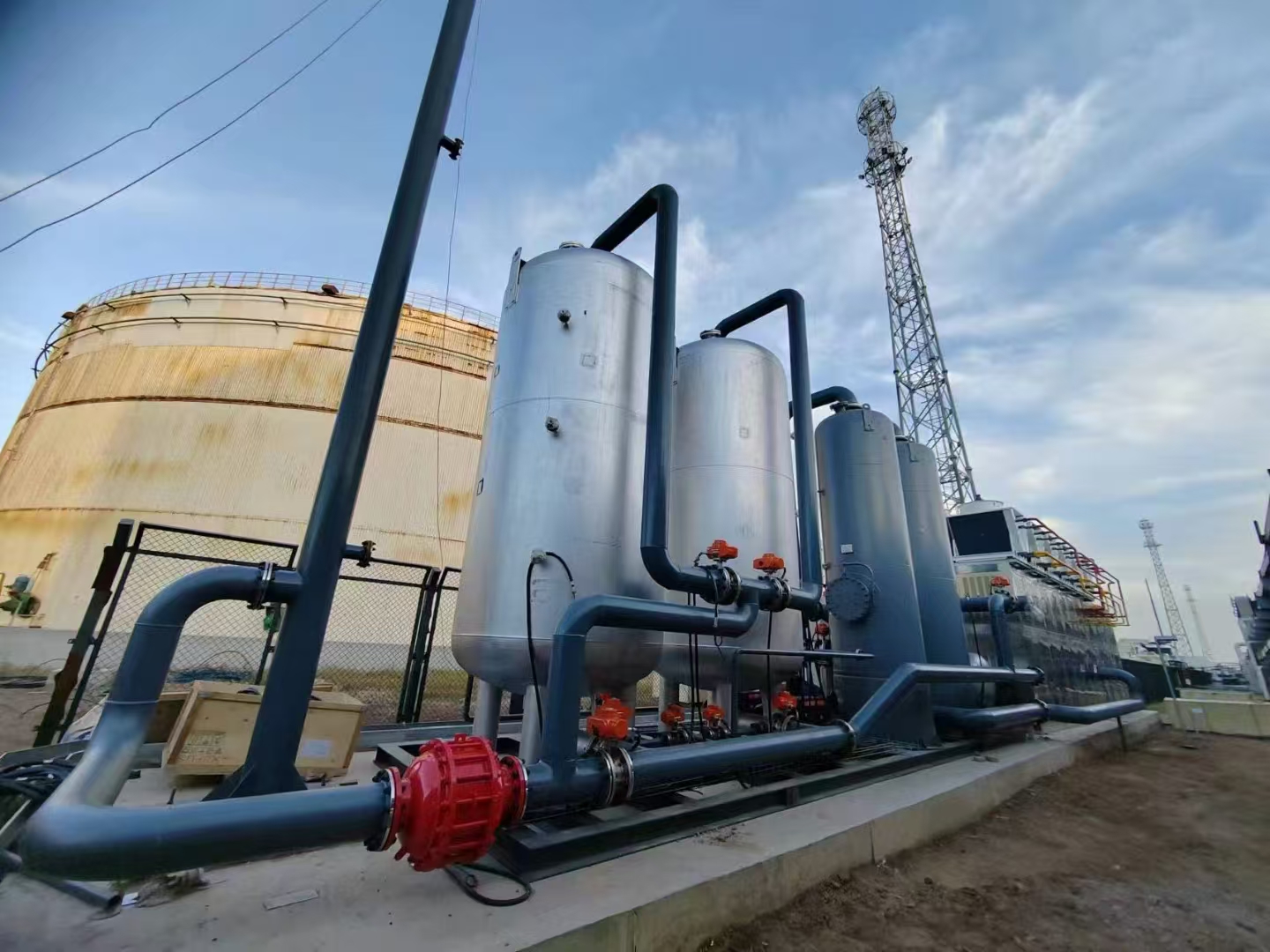
活性炭吸附-氮气脱附-冷凝精制技术是为大风量、中低浓度有机废气量身定制的方案。有机废气经降温预处理后进入活性炭吸附床,洁净气排出;吸附饱和后,采用热氮气(180-200℃)进行脱附解吸,脱附后的高浓度气体经冷凝得到液态溶剂,再进入精馏系统分离提纯至纯度≥99%。该技术的核心优势在于:无废水二次污染——相比传统蒸汽脱附工艺会产生含酸废水和活性炭微孔钙化问题,氮气脱附为全干法工艺,无工业废水排放、无废渣;投资回收期短——一次性投资一般在10-27个月内即可收回全部成本,月运行费用仅占回收溶剂价值的20%左右,收益率高达70%。
The activated carbon adsorption nitrogen desorption condensation refining technology is a customized solution for high air volume and low to medium concentration organic waste gas. The organic waste gas enters the activated carbon adsorption bed after cooling pretreatment, and the clean gas is discharged; After adsorption saturation, hot nitrogen gas (180-200 ℃) is used for desorption. The high concentration gas after desorption is condensed to obtain liquid solvent, which is then separated and purified in the distillation system to a purity of ≥ 99%. The core advantages of this technology are: no secondary pollution of wastewater - compared to traditional steam desorption processes, which can produce acidic wastewater and activated carbon micropore calcification problems, nitrogen desorption is a fully dry process with no industrial wastewater discharge or waste residue; Short investment payback period - A one-time investment can generally recover all costs within 10-27 months, with monthly operating expenses accounting for only about 20% of the recovered solvent value and a high return rate of up to 70%.
真空低温热泵蒸发技术专用于高浓度废液溶剂的回收。在绝对真空环境下,溶剂沸点大幅降低,系统采用复叠热泵设计,占地小、能耗低,同时低温工况可有效防止溶剂氧化和结焦。在汽车涂装场景中,年处理500吨废溶剂的系统可实现70%的回用效率,每年减少350吨危废处置费用,同时节省新溶剂采购费用——两项相加年节省约546万元,扣除运营成本后净收益超过465万元。
The vacuum low-temperature heat pump evaporation technology is dedicated to the recovery of high concentration waste liquid solvents. In an absolute vacuum environment, the boiling point of the solvent is significantly reduced. The system adopts a cascade heat pump design, which occupies a small area and consumes low energy. At the same time, low-temperature conditions can effectively prevent solvent oxidation and coking. In the automotive painting scene, a system that processes 500 tons of waste solvents annually can achieve a 70% reuse efficiency, reduce 350 tons of hazardous waste disposal costs annually, and save on new solvent procurement costs - adding up to approximately 5.46 million yuan in annual savings, the net profit after deducting operating costs exceeds 4.65 million yuan.
多效蒸馏-膜分离耦合技术将热法分离与膜法分离的优势叠加。以超纤材料行业为例,通过三效蒸发器串联实现热能的梯级利用,再辅以PVDF复合膜分离装置进行深度提纯,系统能耗降低26.3%,每年可节约成本835万元。
The multi effect distillation membrane separation coupling technology combines the advantages of thermal separation and membrane separation. Taking the microfiber material industry as an example, the cascade utilization of thermal energy is achieved through the series connection of three effect evaporators, supplemented by PVDF composite membrane separation devices for deep purification. The system energy consumption is reduced by 26.3%, and the annual cost can be saved by 8.35 million yuan.